Nicolas Rougier – CODE beyond FAIR

Jeudi 22 janvier de 14h00 à 15h30

Amphi Ircica – 50 avenue Halley – Haute Borne – Villeneuve d’Ascq

Nicolas Rougier –  CODE beyond FAIR
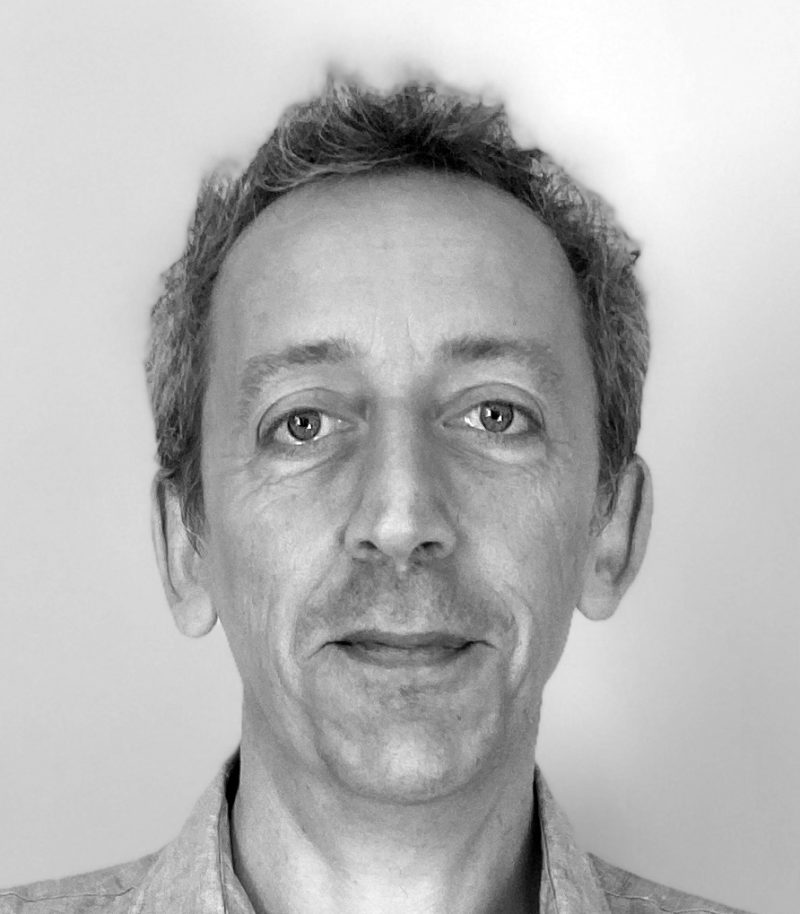
Bio: Nicolas P. Rougier is a senior researcher in computational cognitive neuroscience at Inria, working at the Institute of Neurodegenerative Diseases (Bordeaux, France) where he investigates decision making, learning and cognition. His research aims at irrigating the fields of philosophy with regard to the mind-body problem, medicine to account for the normal and pathological functioning of the brain and the digital sciences to offer alternative computing paradigms. He’s also deeply involved in open and reproducible science. He co-founded the ReScience C journal (2015) and the French Network of Reproducible Research (2021), authored the articles « Transforming Code into Scientific Contribution » and « CODE beyond FAIR » and is a member of the National Committee for Open Science.

Abstract: FAIR principles are a set of guidelines aiming at simplifying the distribution of scientific data to enhance reuse and reproducibility. My talk will focus on research software, which significantly differs from data through its living nature, and its relationship with free and open-source software. Based on the second French plan for Open Science, I’ll introduce a tiered roadmap to improve the state of research software, which is inclusive to all stakeholders in the research software ecosystem: scientific staff, but also institutions, funders, libraries and publishers. The long term goal of such roadmap is to improve software reproducibility.
Sarah Cohen Boulakia – Ten years after the reproducibility crisis in bioinformatics: Workflows reuse in the ShareFAIR project

Jeudi 18 décembre 2025 de 14h00 à 15h30

Amphi Ircica – 50 avenue Halley – Haute Borne – Villeneuve d’Ascq

Sarah Cohen Boulakia – Ten years after the reproducibility crisis in bioinformatics: Workflows reuse in the ShareFAIR project

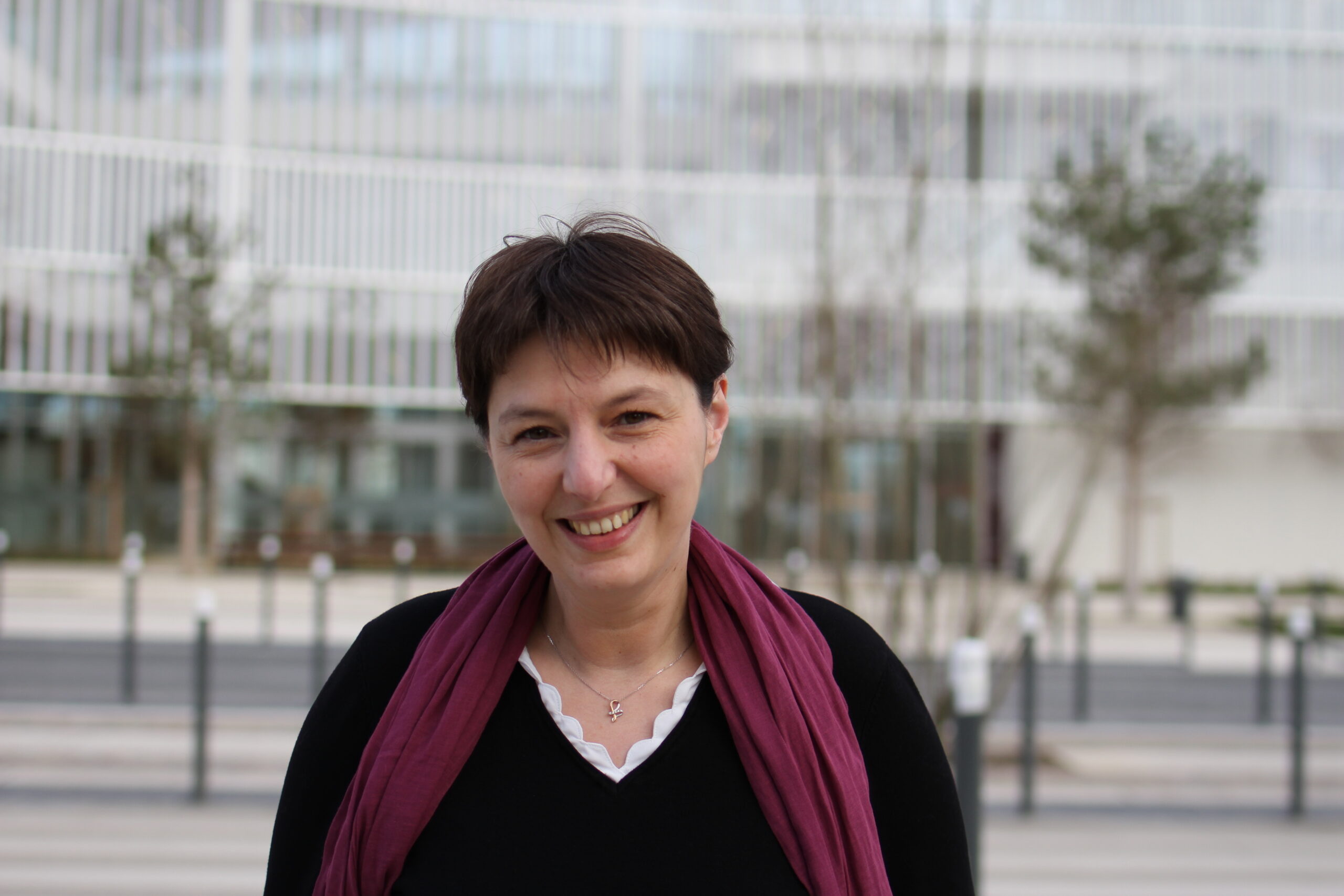
Bio: Sarah Cohen-Boulakia is a full Professor at Université Paris-Saclay. She is a senior membre at IUF. She has been working for twenty years in multi-disciplinary groups involving computer scientists and biologists or physicians of various domains. In the last years, she has animated several working groups on reproducibility of scientific experiments.

Dr. Cohen-Boulakia’s research expertise include provenance in scientific workflows systems, reproducibility of scientific experiments, integration, querying and ranking in the context of biological and biomedical databases. She was awarded the CNRS Silver Medal in 2024.

Abstract: Impossibility to redo our own analysis, failing to re-execute an analysis described in a recent paper: we have all experienced computational reproducibility issues. Ten years ago, the bioinformatics community had to face with the “reproducibility crisis” and has been pioneer in the design of solutions to better reproduce and reuse bioinformatics analysis pipelines.

This talk will review current elements of solutions to design FAIR analysis pipelines, introduce results obtained in the ShareFAIR project (PEPR Santé Numérique) and go on to discuss the challenges posed by this domain and the remaining opportunities of research at the interface of graph algorithmics, databases and text mining.


Felienne Hermans – Feminism & programming language design

Jeudi 30 avril de 14h00 à 15h30
Amphi Ircica – 50 avenue Halley – Haute Borne – Villeneuve d’Ascq

Felienne Hermans – Feminism & programming language design

Short bio:
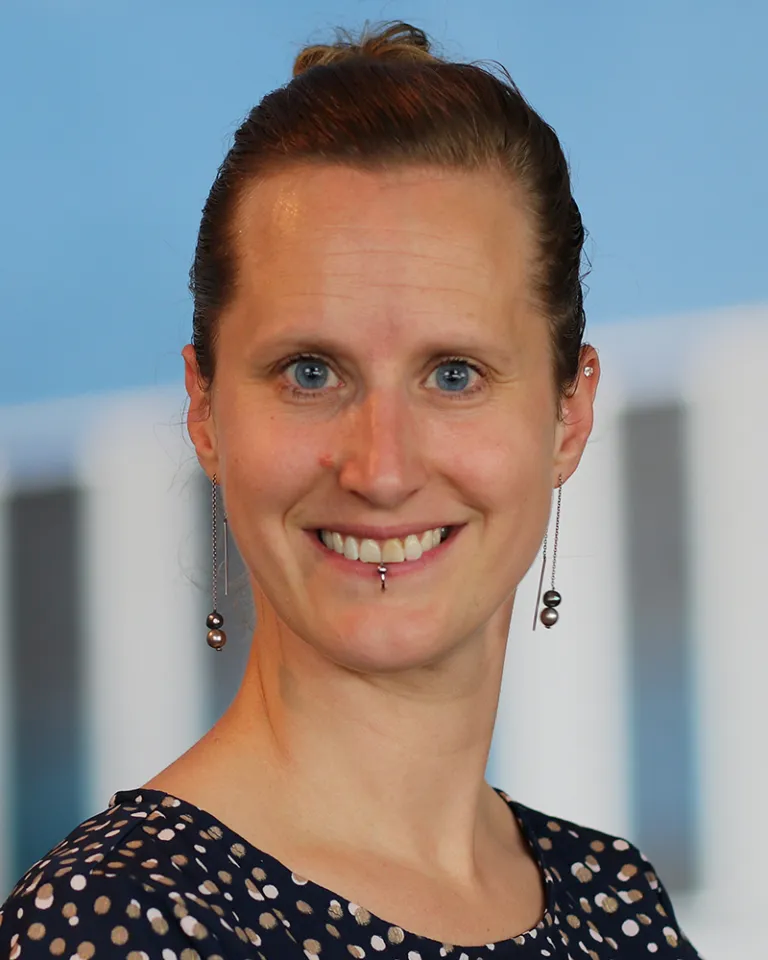
Felienne is a professor of Computer Science Education at the Vrije Universiteit Amsterdam. She also works as a high-school CS teacher one day a week at Open Schoolgemeenschap Bijlmer.
Felienne is the creator of the Hedy programming language, a gradual and multi-lingual programming language designed for teaching. 
She is the author of “The Programmer’s Brain“, a book that helps programmers understand how their brain works and how to use it more effectively. In 2021, Felienne was awarded the Dutch Prize for ICT research. She also has a weekly column on BNR, a Dutch radio station. 

Abstract: 
Programming was once a female only field, all “computers” were women, many of color. However, that situation was short-lived, and today we live in a world in which almost all mainstream programming languages are created by men, many of a western background.

In this talk, Felienne Hermans, professor of computer science pedagogy at VU, and a creator of a programming language herself (www.hedy.org) discusses the history of programming languages and gender. 

She will reflect upon how programming language construction came to be so male dominated, and how with that also an overwhelming masculine discourse was formed. Drawing on work from feminism and Science and Technology Studies (STS), Hermans explores what the impact of the masculine discourse is for the design of programming languages. She closes the talk with a sketch of what a different world for programming languages could look like, both in the context of her own Hedy language, and beyond.

Jean-Claude Planque – IA et le droit pénal

Jean-Claude Planque

Jeudi 23 janvier 2025 de 14h0 à 15h30 Amphi Ircica – 50 avenue Halley – Haute Borne – Villeneuve d’Ascq Les algorithmes sont partout. Depuis quelques temps ce que l’on appelle communément l’IA a fait son apparition dans des domaines divers et variés et semble de plus influer sur nos…

Lire la suite